E-learning platform + AI — academic project (PFA), EMSI · 2025
AI Learning
Smart learning assistant with AI-graded answers
Context and problem
A final-year project (PFA) I designed and built entirely on my own at EMSI. Traditional e-learning platforms rely on multiple-choice quizzes and predefined answers, with no detailed pedagogical feedback. I designed a platform where AI evaluates open-ended answers and generates teaching content.
Objectives
- Offer a structured learning path: courses, modules, lessons, exercises.
- Automatically evaluate students' free-text answers using the OpenAI API.
- Generate teaching content with AI on demand.
- Provide complete progress tracking: scores, advancement, statistics.
- Clearly separate student and instructor roles.
My role
- Full-stack design and development of the platform, end to end.
- OpenAI API integration for answer evaluation and content generation.
- Development of the student and instructor journeys: courses, lessons, exercises, progress.
- Data modelling and authentication with Supabase / PostgreSQL.
Key features
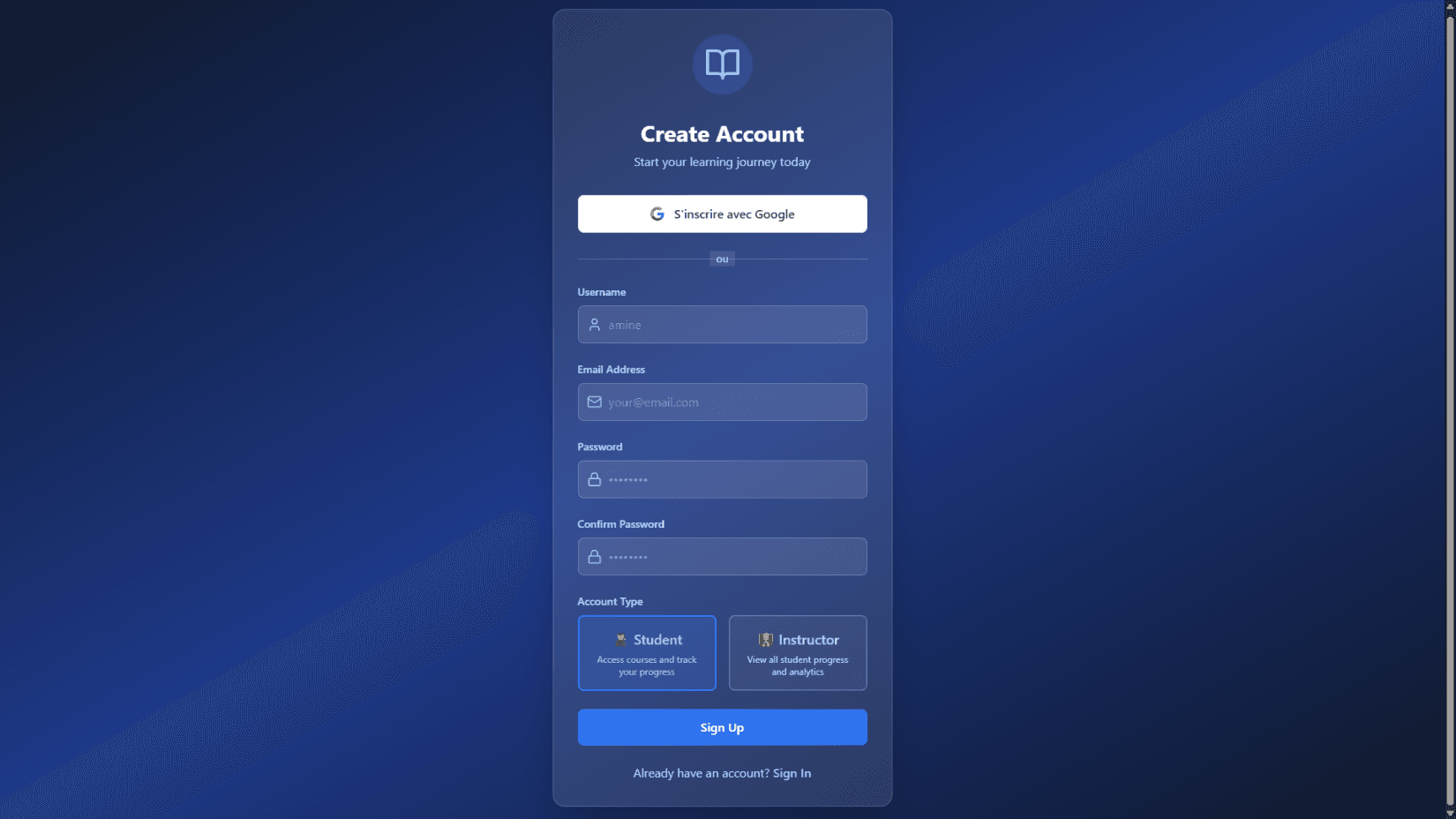
- Sign-up and sign-in via email or Google account, with student or instructor role.
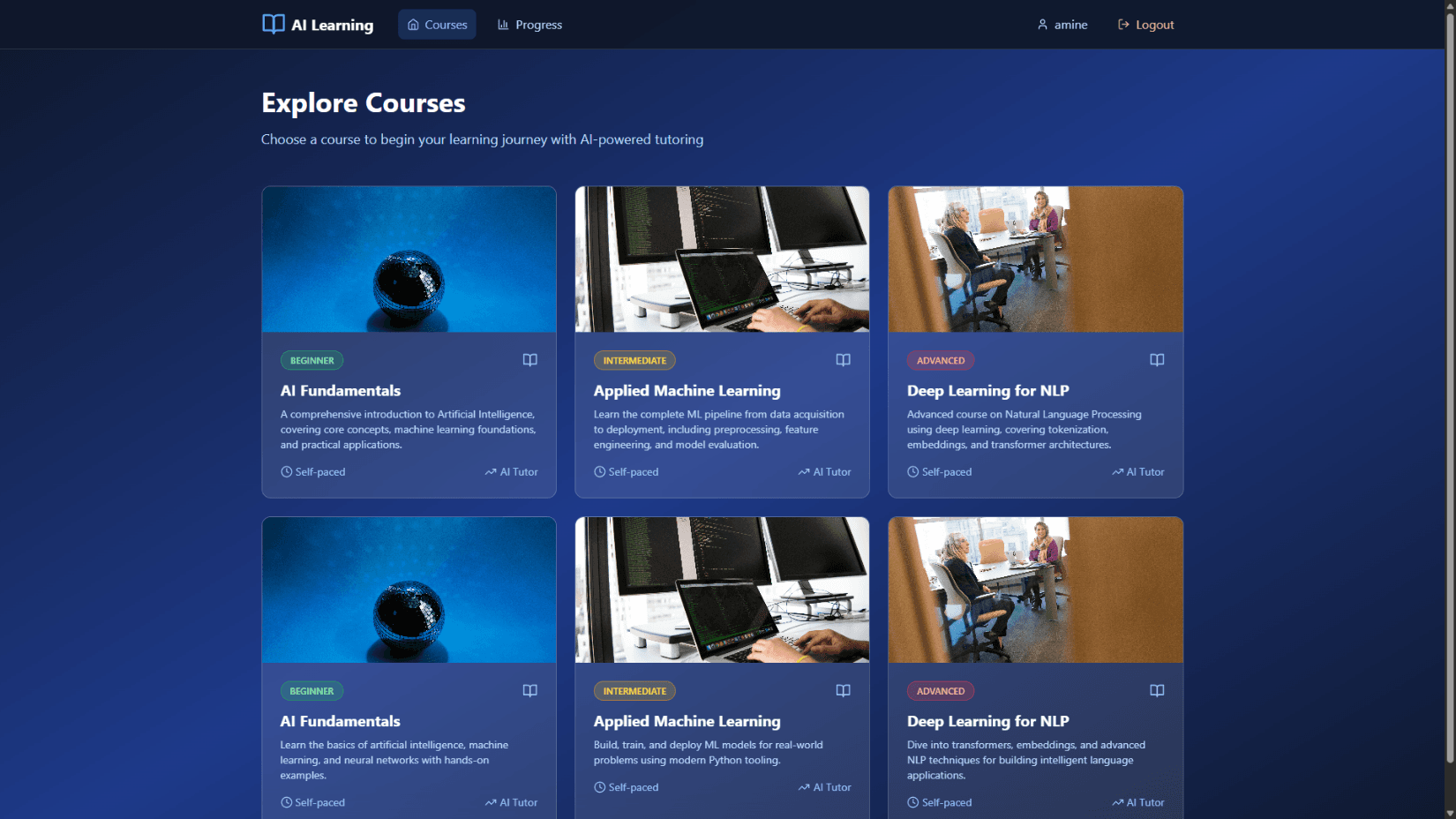
- Course catalog by level: beginner, intermediate, advanced.
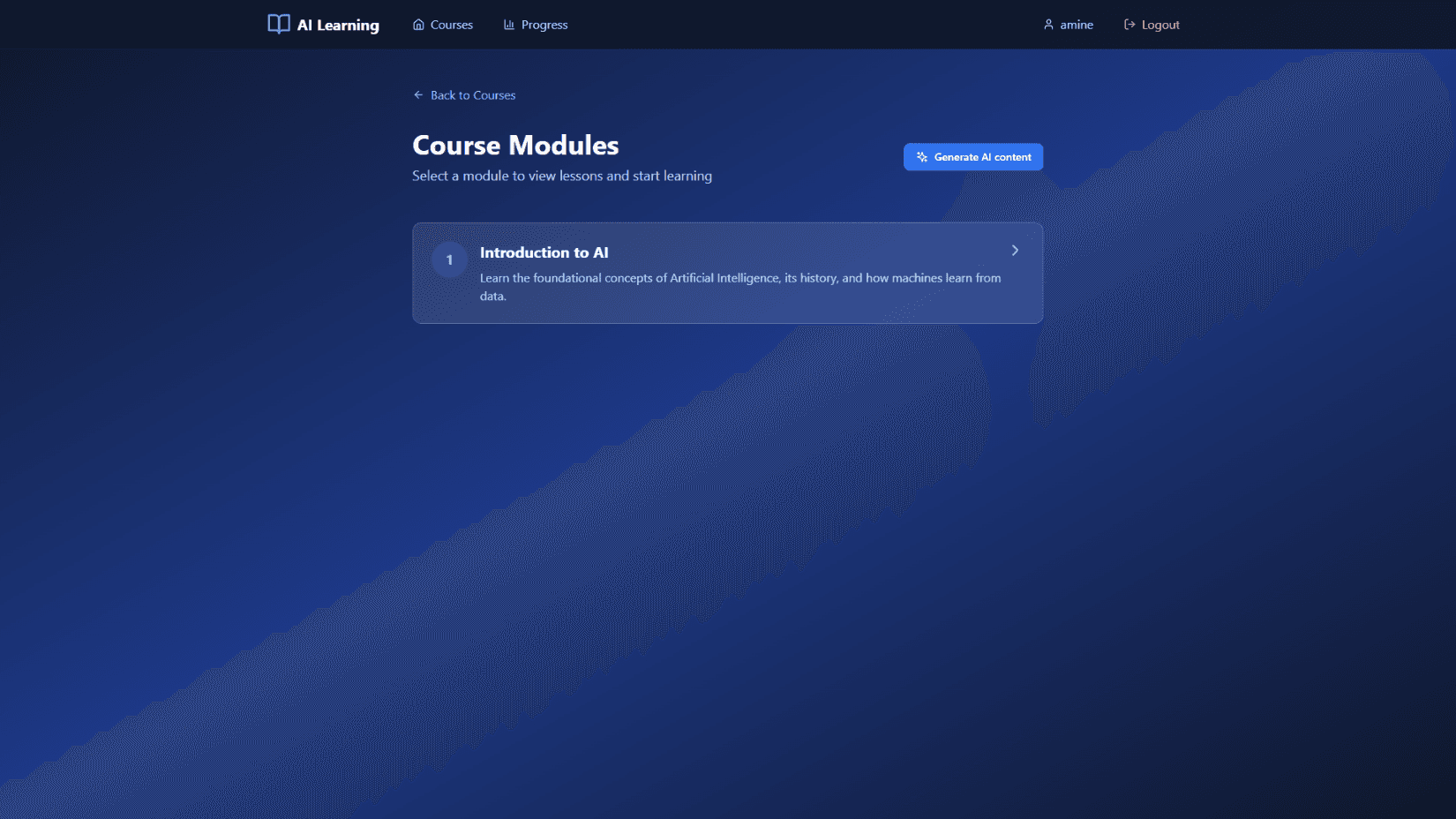
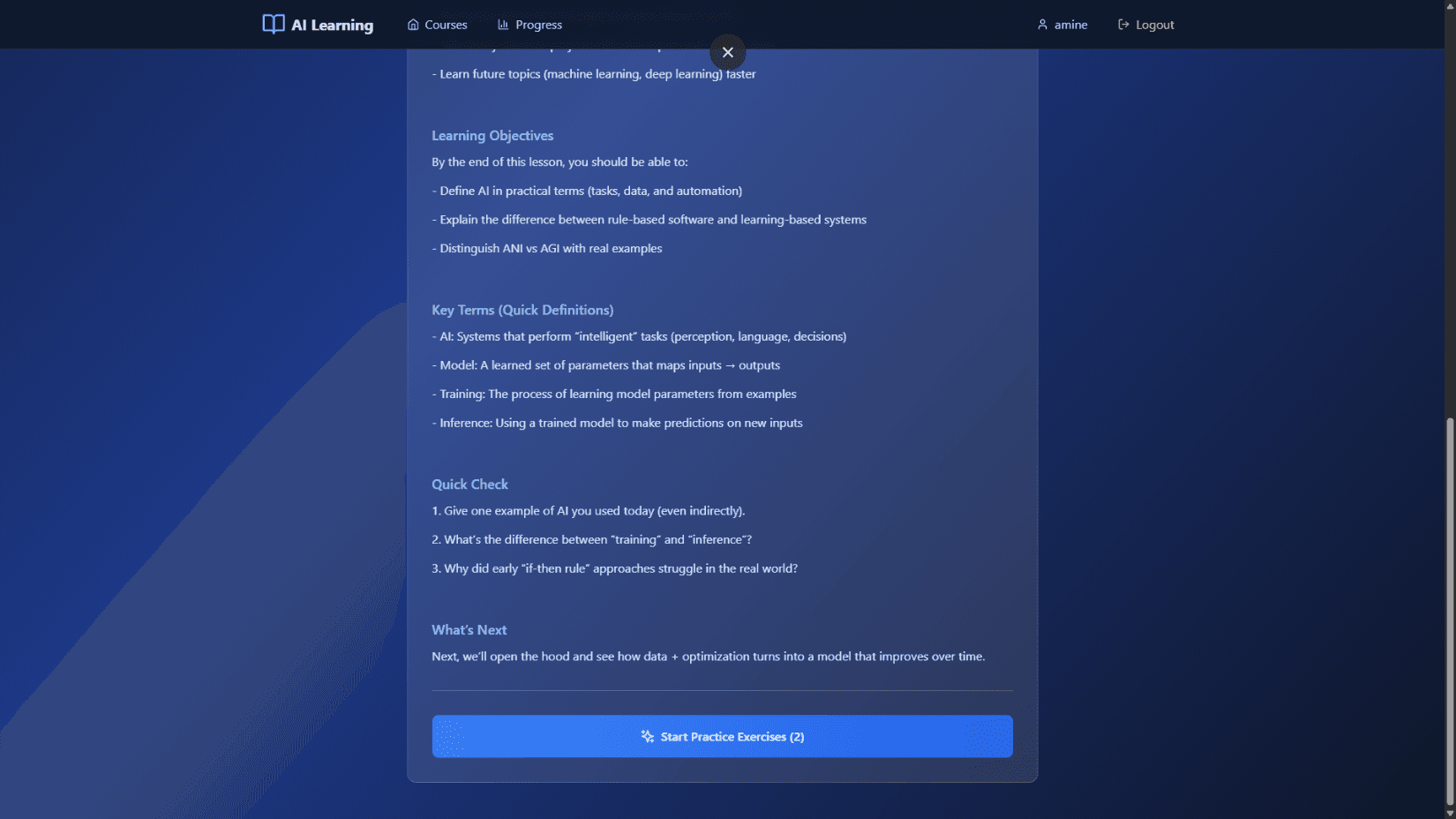
- Courses structured into modules and lessons with objectives and key concepts.
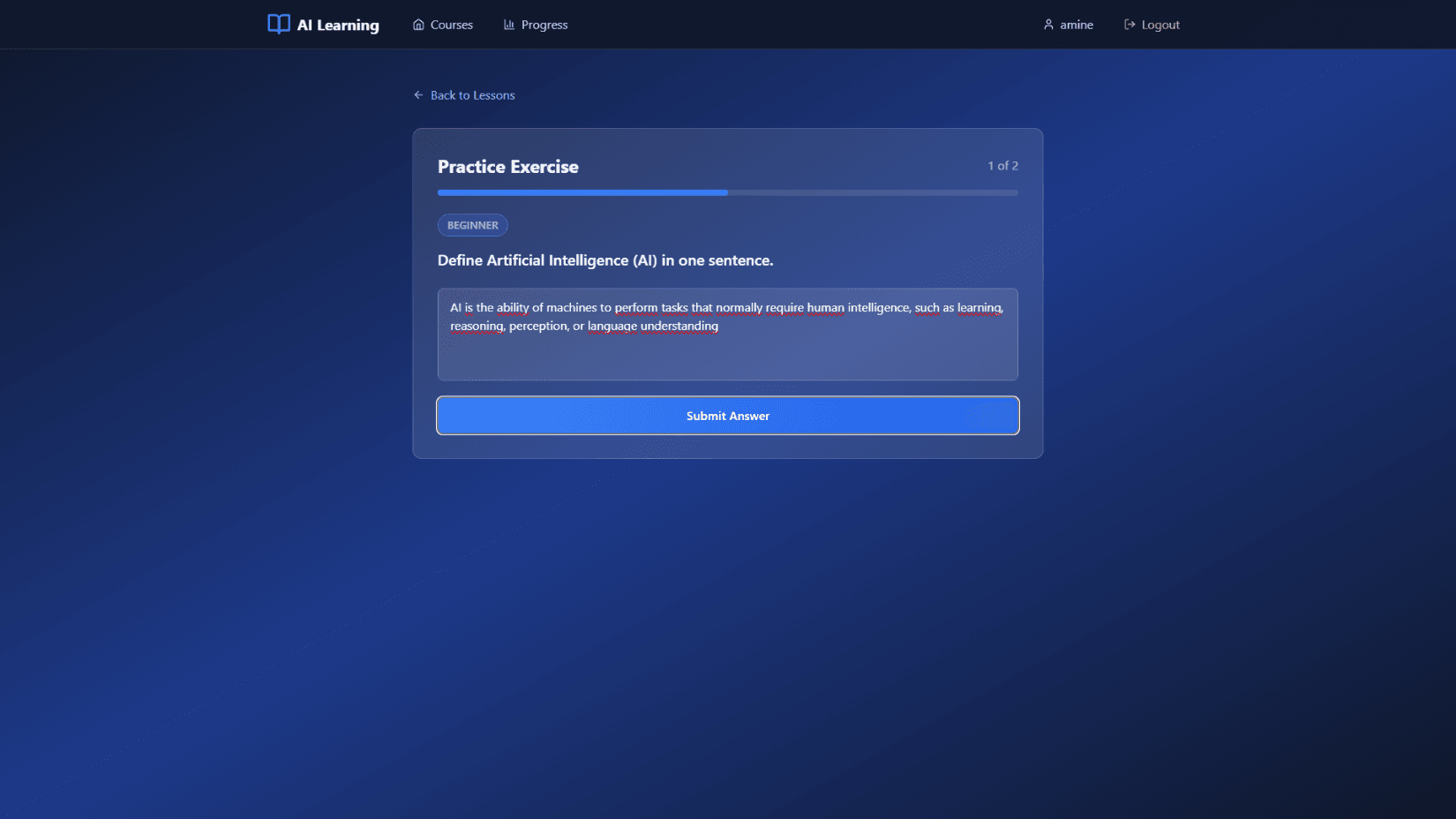
- Practice exercises with free-text answers, automatically graded by the AI.
- AI-generated teaching content.
- Progress tracking: scores and statistics for students, overview for instructors.
Technical architecture
- Three-tier full-stack architecture: presentation, application, data.
- React frontend with Tailwind CSS.
- Node.js / Express backend exposing the application API.
- PostgreSQL database via Supabase: authentication, roles and progress data.
- AI layer: OpenAI API calls for answer evaluation and content generation.
Technologies
- React
- Node.js
- Express
- Supabase
- PostgreSQL
- Tailwind CSS
- OpenAI API
Technical decisions and challenges
- Grading open-ended answers: crafting reliable evaluation prompts where a binary quiz is not enough.
- Role separation: student and instructor journeys and permissions differ on almost every page.
- Tracking consistency: aggregating scores and progress across courses, lessons and exercises.
Outcome and limitations
- Working platform presented and defended: complete journey from sign-up to the AI-graded exercise (real screenshots below, taken from the project report).
- Known limitation: operation depends on the OpenAI API (key required) and a Supabase project — not publicly deployed.
- Known limitation: academic demonstration project with sample course content.
Screenshots